
Beating the staff shortage: doing more with less in independent retail
As anyone working in retail will confirm, finding good staff is a constant challenge.
From recruitment to training, the time and financial investment is significant, and once you have got the right people in place, you still have to manage them, their career ambitions and the reality that they may not see retail as their long-term career.
And then, of course, you’ve got to pay salaries – and with the National Living Wage and employer National Insurance contributions continuing to rise, along with the cost of just about everything, that is a challenge in itself. In fact, according to data from the ONS, 35% of UK businesses report the cost of labour is their single greatest challenge.
Of course, part of the value proposition of a local retail store is that face-to-face service and friendly smile, and only people can deliver that.
However, by moving to a ‘supervision model’ in-store, you can serve more customers, reduce the stress levels on your valued team, and plan for growth without necessarily taking on more people.
The supervision model – one person, many lanes
The traditional checkout model has been one person serving one customer. That can be multiplied of course, but the 1:1 ratio is still there. Ensuring you have enough staff on enough tills at peak times, while ensuring there’s enough for them to do during quieter spells, is a constant juggle for retailers.
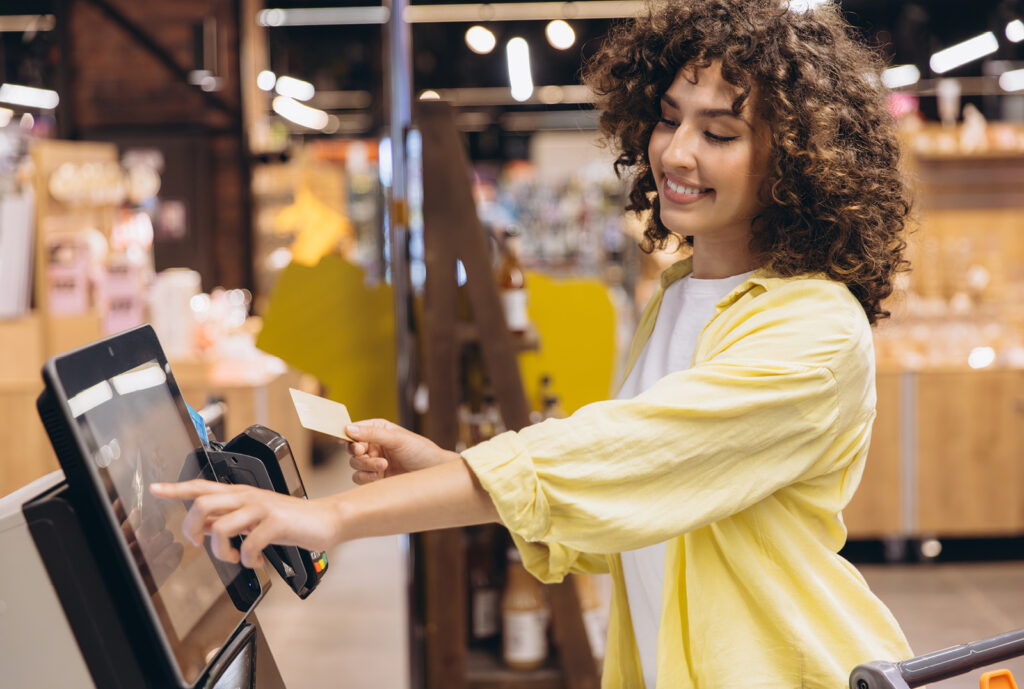
However, under a supervision model with self-serve units, one staff member can supervise multiple self checkout lanes – and that has a number of benefits.
It reduces friction, enabling you to keep customers with only a few items moving quickly through the checkout, preventing long queues building up.
It protects your team, removing repetitive high pressure manual scanning at peak times, and enabling them to focus on higher value tasks, including customer service and restocking.
It improves the customer experience, by giving customers the option of self-serving you reduce queues and deliver an experience in-line with the large chains, while retaining that face-to-face relationship.
Self-serve units as practical improvement
Automation is an essential part of retail today, and 61% of retail execs now see it as a core driver of competitive advantage, and a ‘non-negotiable’.
For independent retailers, offering self-serve doesn’t mean you’re becoming a faceless corporate entity – in fact, it means the opposite.
By automating the routine, you’re helping the business remain profitable, building seasonal resilience, and reducing the reliance on people.
You’re also creating time for you and your staff to deliver that friendly, reliable and consistent service that can truly differentiate.
The hybrid advantage
A fear for independent retailers – particularly in more rural areas – is tech failure. Unlike many cloud-only systems, CSY’s hybrid EPOS systems still work if your internet drops – meaning you stay 100% operational even when offline.
While CSY offers 364 day telephone help, the reassurance of having that fallback is critical for maintaining customer trust, and gives you confidence, knowing your store will never have to close its digital doors during a peak period.
Keeping your local heart
Retail success today relies on more than good people, good products and good service – it requires you to be streamlined, efficient and ready to adapt.
Self-serve units help you to compete like a chain with the ability to manage peak footfall with ease, while connecting like a local, by giving your staff time to talk with your customers.
To learn more about CSY’s self-serve units, click here.